Flat and low-slope roofing for homes, additions and small commercial buildings
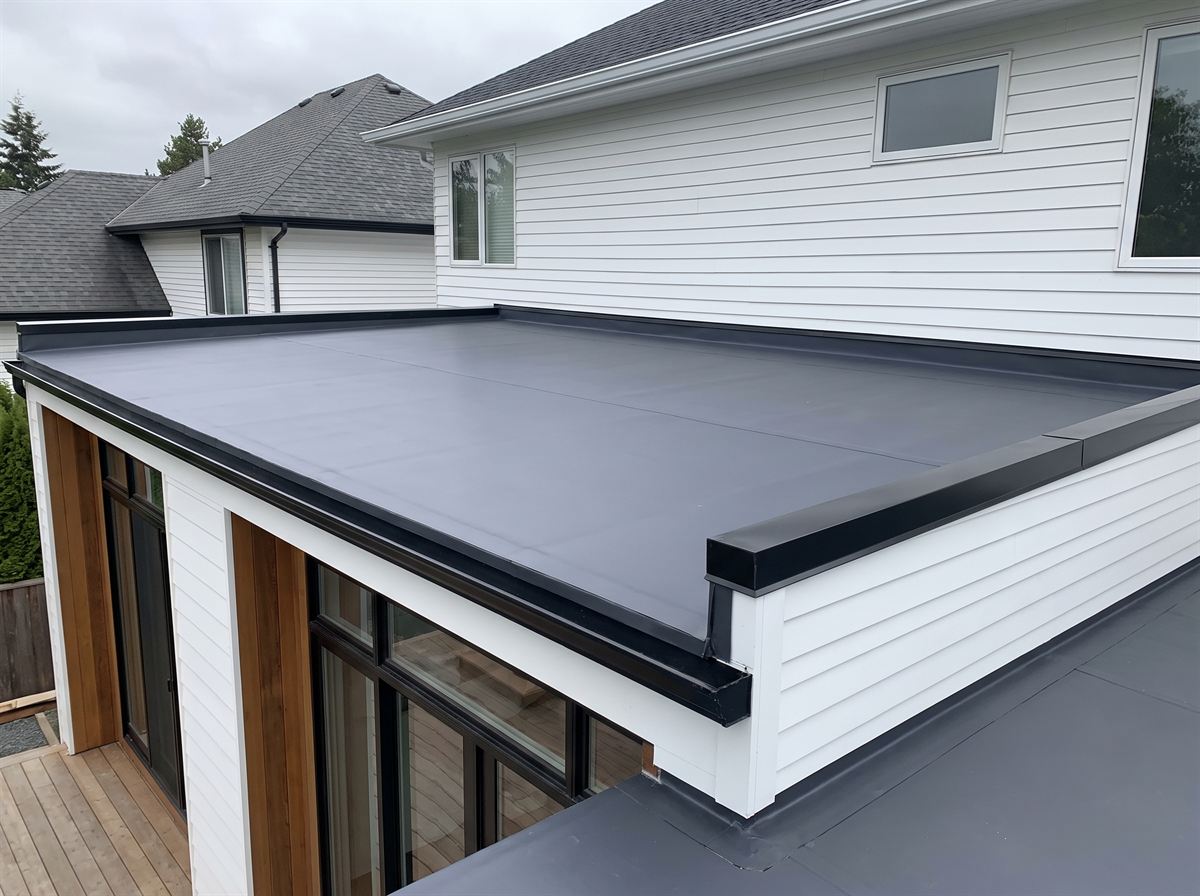
Flat roofs are everywhere on Long Island, over additions, porches, garages and dormers, and on the shops and mixed-use buildings along every main street. They account for a large share of our leak calls. We install TPO, EPDM and modified bitumen roofs with built-in slope, welded seams and proper drainage so water leaves instead of sitting.

GAF Master Elite® CertifiedFewer than 3% of roofing contractors nationwide. Verify contractor ID 1135609 on GAF

BBB Accredited BusinessA+ rating from the Better Business Bureau. See our BBB profile.
What's included
- TPO, EPDM rubber and modified bitumen systems
- Tapered insulation that sends water to the drains instead of letting it pond
- Heat-welded seams and fully flashed penetrations, including pipes and skylights, plus wall tie-ins
- Repairs and re-covers, through to full replacements
- Garages, additions, porches, dormers, small commercial buildings
- Gutter and scupper work, along with drains, done with the roof
Flat roofs fail at the seams and drains rather than in the field of the membrane. We build slope into the insulation and weld every seam instead of relying on adhesive alone. Every penetration gets flashed before we leave. Then we walk the roof with you and show you where the water goes.
L.I. Taylor Construction is a GAF Master Elite® contractor (ID 1135609), licensed in Suffolk County (HI-64134), Nassau County (196461) and New York City (2114459-DCA), and fully insured. It is a BBB Accredited Business with an A+ rating. Financing is available for qualifying projects.
How a flat roof job goes
Inspection
We look for ponding marks, open seams, blisters, cracked flashing and soft spots that mean wet insulation. On commercial roofs, we take core samples to count the roof layers already in place.
Written plan
The estimate specifies a repair, re-cover or full replacement. It names the membrane and lays out the insulation plan, the slope and how drainage gets fixed.
Tear-off or prep
Failed material and wet insulation come off. For a re-cover, we clean the existing surface and install a separation layer.
Insulation and slope
Tapered polyiso insulation sends water toward the drains or scuppers. Most flat roofs never got this step the first time.
Membrane and seams
We roll out the membrane and fasten or adhere it. Every seam is hot-air welded and probed. Edges, pipes, walls and drains get flashed with the manufacturer's accessories.
Water test and walk-through
Where practical, we flood-test the drains. Then we walk the roof with you and hand over the warranty paperwork.
Which flat roof system fits
What affects the cost
Flat roof pricing depends on the area, the material underneath and the drainage work. Here's what affects the price:
- Area, and whether the roof is one simple rectangle or broken up by walls, dormers and equipment.
- Repair, re-cover or full tear-off. Wet insulation forces a tear-off.
- Insulation and slope. Tapered insulation adds material, but it stops ponding.
- Drainage changes, including new drains, scuppers or gutters.
- Penetrations. Every pipe, skylight, HVAC curb and wall tie-in gets flashed individually.
- Access. Second-story flat roofs over additions need more staging than a garage.
The only way to get a real number is a free on-site estimate. Request one below or call 631-404-9022. Your call goes straight to David, and the estimate is in writing.
Related services and nearby towns
Often done together
Where we do this work
Flat roofing questions
Why does my flat roof keep leaking after repairs?
Usually because the water is ponding. Standing water finds every pinhole and open seam, and patches on a roof with no slope fail again within a season or two. Fixing the slope with tapered insulation and clearing the drains solves the cause; patching only treats the symptom.
What is the best flat roof material for a house on Long Island?
For a small residential flat roof over an addition or garage, EPDM rubber is hard to beat. One sheet, few seams, decades of track record. For larger areas in full sun, white TPO keeps the room below cooler. Choose modified bitumen when the roof will be walked on regularly.
How long does a flat roof last?
Twenty to thirty years for TPO and EPDM installed with proper drainage; fifteen to twenty-five for modified bitumen. Ponding water or clogged drains make roofs fail years earlier, regardless of material.
Can a flat roof be installed over the old one?
Sometimes. If there's only one layer and the existing roof is dry and firmly attached, a re-cover with a separation board is legitimate and saves the tear-off cost. If there are two layers or the insulation is wet, the old roof has to come off.
Get a free estimate
Tell us about the job and David will call you back, usually the same day. No pressure, no obligation, and financing is available for qualifying projects.
631-404-9022Open every day, 8AM–6PM