Flooring installed on a floor that is flat first
Hardwood, luxury vinyl plank, laminate and tile look good when they go in. Five years later, how they look depends on the subfloor beneath them. Subfloor comes first. We repair it, lay the finish floor tight and level, then finish the trim and transitions before we leave. You won't need a second contractor or be left with a loose threshold.

GAF Master Elite® CertifiedFewer than 3% of roofing contractors nationwide. Verify contractor ID 1135609 on GAF

BBB Accredited BusinessA+ rating from the Better Business Bureau. See our BBB profile.
What's included
- Solid and engineered hardwood, sanded and finished or prefinished
- Luxury vinyl plank (LVP) and laminate, floating or glued
- Porcelain and ceramic tile, including large-format and heated floors
- Subfloor repair and leveling compound, with moisture checks
- Removal and disposal of carpet, tile and old wood floors
- Baseboard and shoe molding, with transitions and thresholds
A floor is only as flat as what's under it. We repair the subfloor before laying the finish floor tight and level, and complete the trim and transitions before we leave. We also do kitchens, drywall and paint, so the floor can be part of a bigger room job under one schedule.
L.I. Taylor Construction is a GAF Master Elite® contractor (ID 1135609), licensed in Suffolk County (HI-64134), Nassau County (196461) and New York City (2114459-DCA), and fully insured. It is a BBB Accredited Business with an A+ rating. Financing is available for qualifying projects.
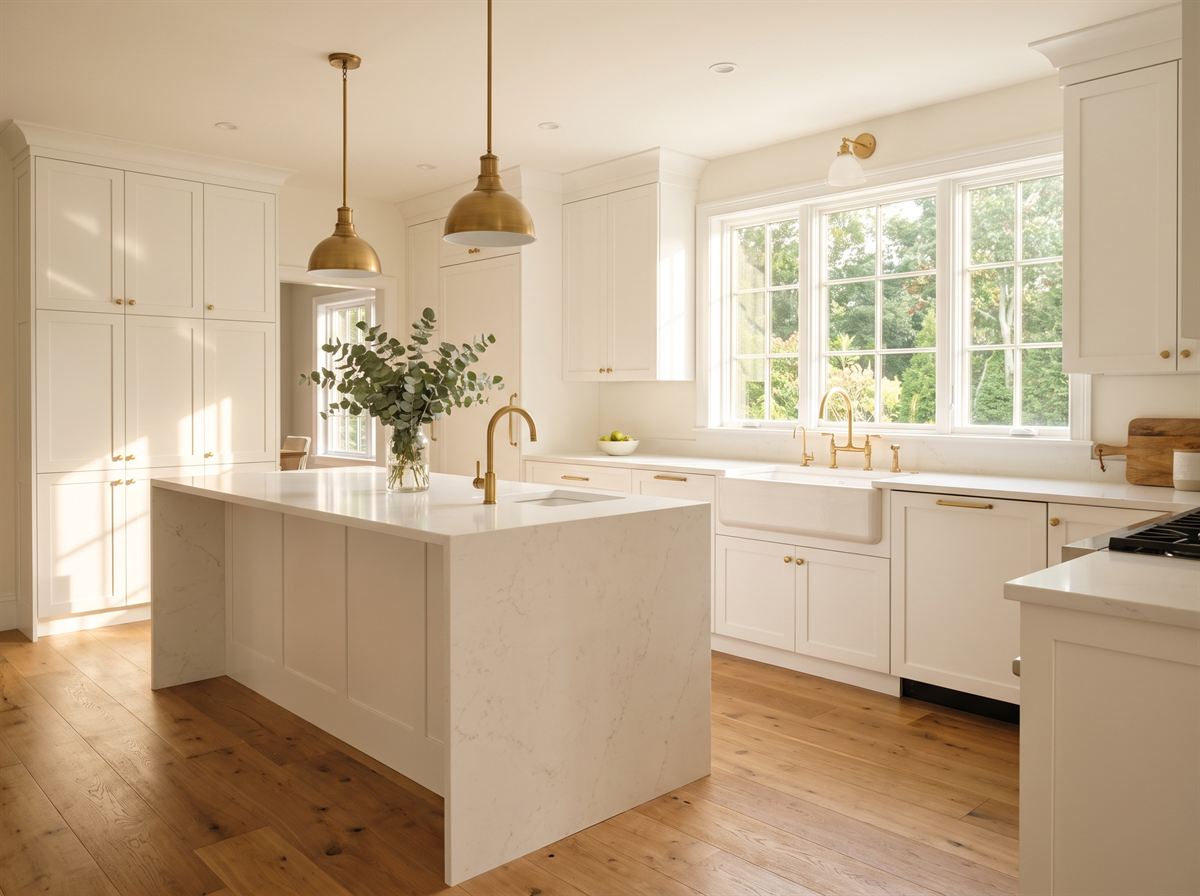
How a flooring job goes
Measure and check the subfloor
We measure the rooms and check for squeaks and soft spots, then look for high or low areas in the subfloor. We also test for moisture on slabs and in basements.
Choose the floor and the layout
Choose the material, plank width, color and direction. Running boards toward the main light source and through doorways without breaks makes rooms feel bigger.
Remove the old floor
We remove and dispose of the carpet, tack strip, old tile or worn wood, then pull the staples to leave the subfloor clean.
Repair and level
We screw down loose sheets and replace rotted areas. Then we use leveling compound to bring the floor within the new material's flatness tolerance.
Install
Underlayment goes down before the flooring. Hardwood is nailed or glued; floating LVP or laminate gets the right expansion gap. Tile goes on a proper substrate in a level, straight layout.
Trim and transitions
We fit baseboard or shoe molding and reducers or thresholds at each doorway. Then we clean up before the furniture goes back.
Flooring options
What affects the cost
Flooring is priced per square foot for material and labor, plus whatever work the subfloor needs. The main factors:
- Square footage, including rooms and closets, and the number of doorways.
- Material: laminate and LVP cost less than hardwood and tile.
- Subfloor work: leveling or replacing rotted sections, plus any moisture barrier needed over a slab.
- Removal and disposal of the existing floor.
- Pattern and layout: diagonal and herringbone layouts take more time and material. So does large-format tile.
- Stairs, priced per step, and new trim or baseboard.
The only way to get a real number is a free on-site estimate. Request one below or call 631-404-9022. Your call goes straight to David, and the estimate is in writing.
Related services and nearby towns
Often done together
Where we do this work
Flooring questions
Which flooring is best for a Long Island basement?
Luxury vinyl plank or tile. Both handle the moisture that comes through a slab on Long Island. Solid hardwood and most laminate should stay above grade; engineered hardwood can work in a dry, dehumidified basement.
Can new flooring go over my existing floor?
Floating LVP or laminate can often go over a flat, sound existing floor, saving removal costs. Tile and hardwood need to go on the subfloor. Soft or loose flooring has to come up first. So does anything badly out of level.
How long does a flooring installation take?
Most single rooms are done in a day. A whole first floor in LVP or prefinished hardwood takes two to four days. Site-finished hardwood adds drying time between coats. Tile needs a day for the mortar to cure before grout.
Do you refinish existing hardwood floors?
Yes. If the boards have enough thickness left, sanding and refinishing costs far less than new flooring and can change the color completely. We'll tell you if the floor has been sanded too many times to do it again.
Related project
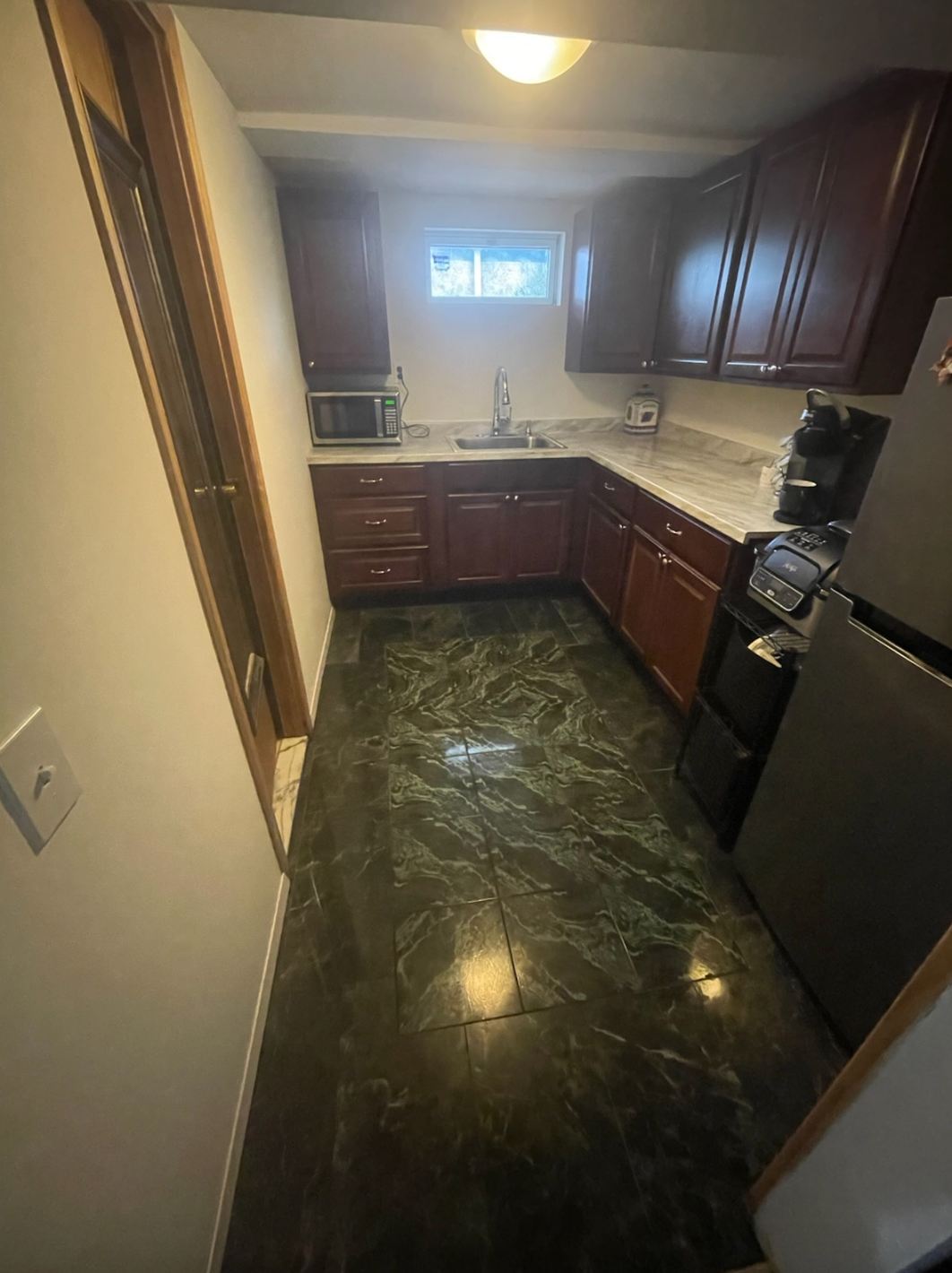
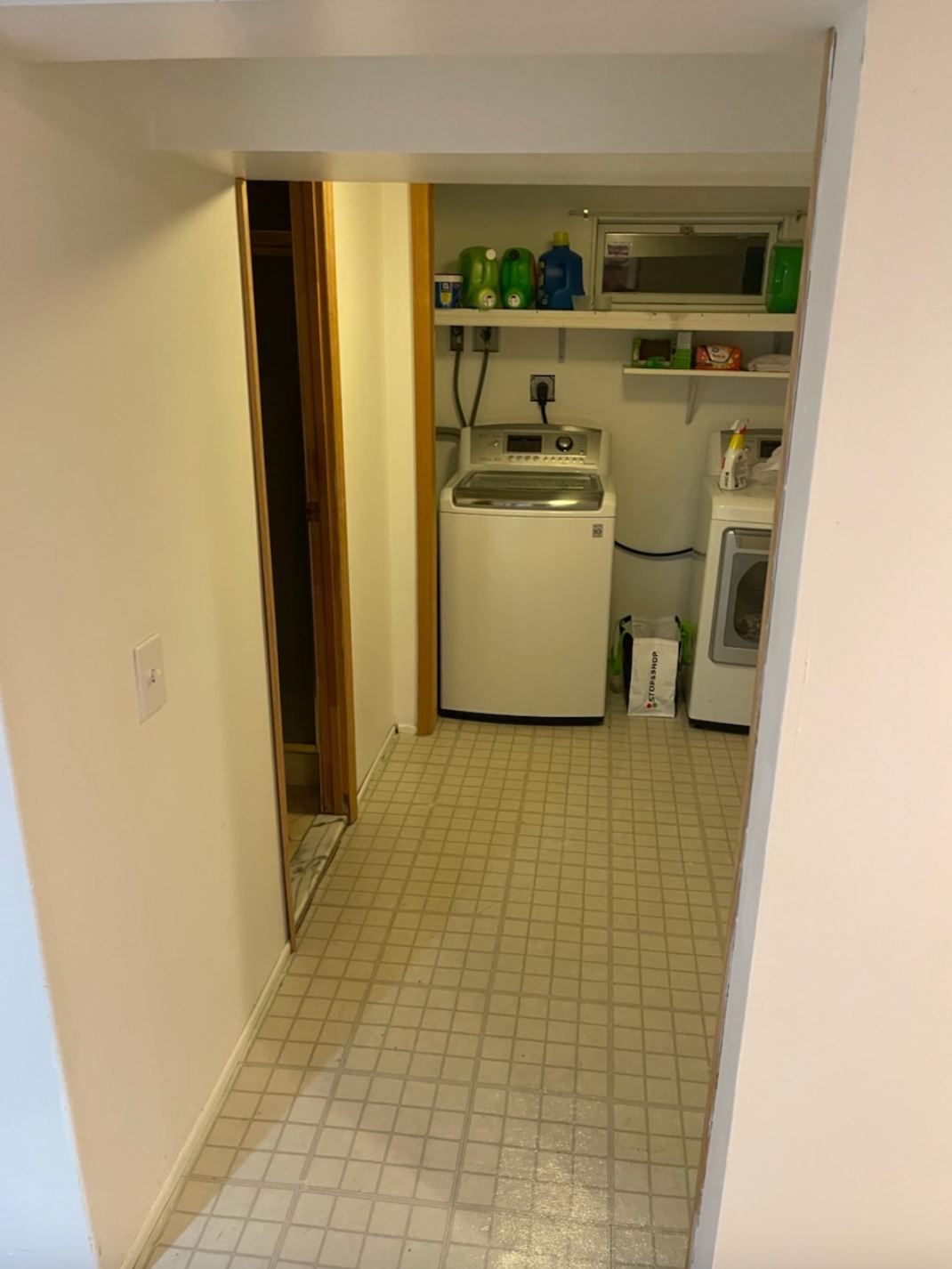
From the LIT gallery. Drag the handle to compare before and after.
Get a free estimate
Tell us about the job and David will call you back, usually the same day. No pressure, no obligation, and financing is available for qualifying projects.
631-404-9022Open every day, 8AM–6PM